
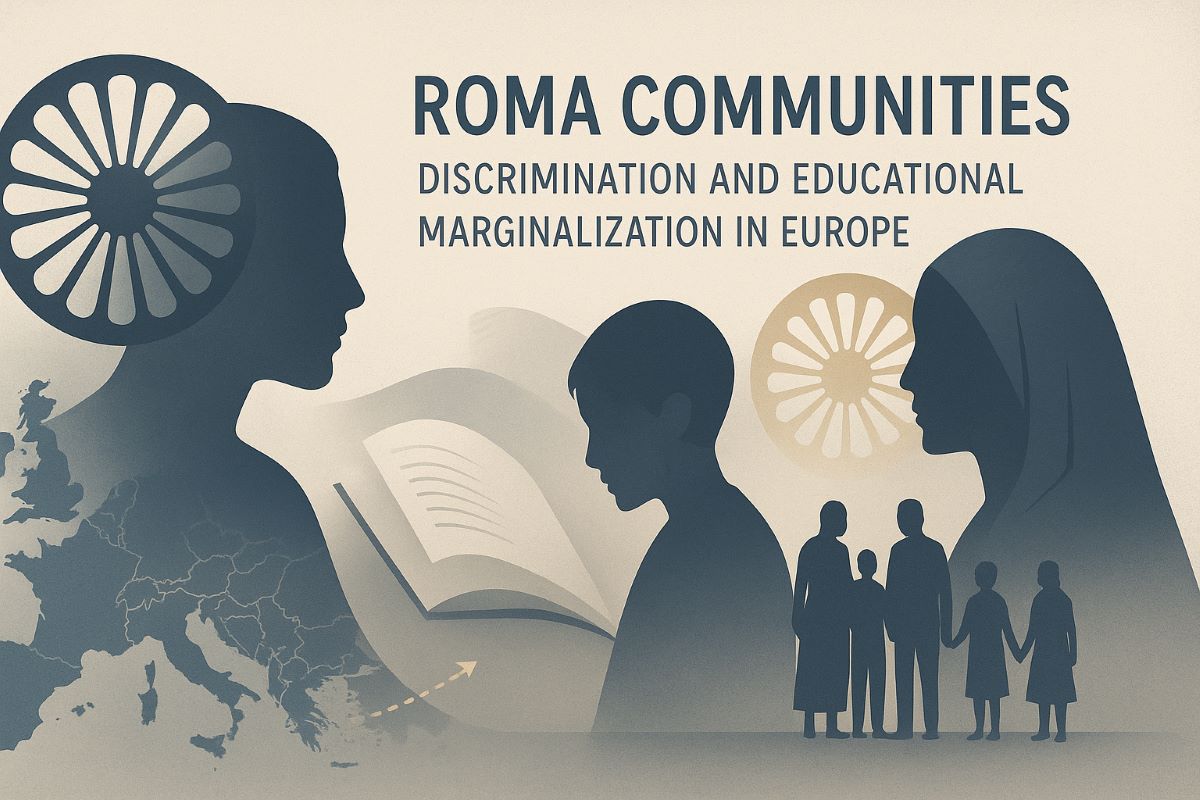
Roma communities constitute one of Europe’s most historically entrenched and culturally distinct minority populations. Despite a long presence on the continent, Roma continue to experience profound social exclusion, economic disadvantage, and discrimination across many states (European Union Agency for Fundamental Rights, 2022). Understanding Roma communities requires an interdisciplinary approach that attends to language and identity, patterns of settlement and socioeconomic marginalization, and the policy frameworks and civil-society responses that shape contemporary prospects. This article synthesizes linguistic–historical scholarship and recent empirical evidence to outline the principal features of Roma identity, document persistent inequalities, and evaluate contemporary strategies for inclusion.
Historical and linguistic foundations of Roma identity
The Roma are a heterogeneous set of populations whose shared identity is foregrounded by common linguistic roots and migratory history. Linguistic and comparative-historical research has established that Romani (the primary language family spoken by many Roma) derives from Indo-Aryan origins and has undergone extensive contact-induced change in Europe; the language functions as a core marker of group belonging for many Roma communities even where dialectal diversity is pronounced (Matras, 2002). Matras’s comprehensive linguistic treatment highlights how dialect differentiation, patterns of lexical borrowing, and sociolinguistic variation mirror historical processes of migration, settlement and interaction with host populations—thereby linking language to broader processes of identity formation (Matras, 2002). While language is not a universal or exclusive criterion for Romani identity—many Roma speak dominant national languages—the linguistic evidence provides a powerful anchor for understanding long-term continuity and internal diversity.
Socioeconomic disadvantage and lived marginalization
Contemporary empirical studies underscore the scale and persistence of socioeconomic disadvantage among Roma in Europe. Large-scale survey evidence collected by the European Union Agency for Fundamental Rights (FRA) in 2021 documents stark gaps between Roma and the broader population in income, housing, access to basic services, and vulnerability to poverty (European Union Agency for Fundamental Rights, 2022). For example, the FRA survey found that a substantial majority of Roma respondents remain at high risk of poverty relative to EU averages, and that many live in inadequate housing conditions—indicators that reflect both material deprivation and structural exclusion (European Union Agency for Fundamental Rights, 2022). These material disparities intersect with discrimination: antigypsyism—both institutional and interpersonal—shapes access to education, healthcare and employment, thereby reproducing intergenerational disadvantage (European Union Agency for Fundamental Rights, 2022).
The mechanisms that generate and sustain exclusion are multiple. Segregated schooling and barriers to employment are often produced by spatial marginalization (concentrations in informal settlements or segregated neighborhoods) and by limited recognition of qualifications and social capital. Health disparities likewise reflect unequal access to services and discrimination within healthcare settings. The FRA data point to the importance of measuring both objective deprivations (housing quality, employment status) and subjective experiences of discrimination when assessing the full burden of exclusion faced by Roma communities (European Union Agency for Fundamental Rights, 2022).
Cultural dynamics, internal diversity, and resilience
Roma communities are far from monolithic. Variations in language use, migratory history, socioeconomic position, and relations with the state produce a plurality of Roma experiences across national and regional contexts (Matras, 2002). This internal diversity has analytical and policy implications: one-size-fits-all interventions risk misdiagnosing needs or reinforcing local inequalities. At the same time, Roma communities display adaptive strategies and significant forms of social capital. Family networks, informal economic practices, and community-based organizations often function as mechanisms of mutual support and cultural reproduction. Scholarship that centers Roma agency emphasizes community-driven initiatives—particularly in education, health promotion, and local governance—as critical complements to top-down policy measures (Matras, 2002; European Union Agency for Fundamental Rights, 2022).
Policy frameworks and the limits of mainstream approaches
European and national policy frameworks have progressively recognized the need to address Roma exclusion, producing three interrelated strands of response: (1) targeted inclusion programmes (education, housing, employment), (2) anti-discrimination legislation and monitoring, and (3) efforts to strengthen participation and civil-society capacity (European Union Agency for Fundamental Rights, 2022). However, evaluations suggest mixed effectiveness. Targeted programmes have sometimes failed to reach the most marginalized groups, while anti-discrimination laws often lack robust enforcement mechanisms. Moreover, policies that emphasize assimilationist models (encouraging cultural abandonment in exchange for social goods) can provoke resistance and produce unintended harms by eroding community cohesion.
The FRA’s 2021 survey provides a cautionary empirical lesson: progress at the level of law or policy design does not automatically translate into improved living conditions on the ground without sustained monitoring, adequate resourcing, and meaningful participation of Roma themselves in policy design and implementation (European Union Agency for Fundamental Rights, 2022). Effective inclusion therefore requires a rights-based approach that combines universal social protections with measures tailored to the structural circumstances of Roma communities, alongside mechanisms for accountability and community representation.
Research and methodological considerations
Studying Roma communities raises methodological and ethical complexities. Roma populations are often undercounted in censuses and official statistics due to a combination of self-identification concerns and census methodology, complicating efforts to estimate population size and needs reliably (Matras, 2002; European Union Agency for Fundamental Rights, 2022). Survey approaches that incorporate community engagement, culturally sensitive fieldwork, and triangulation with administrative data have proven more reliable. Moreover, interdisciplinary research that integrates linguistic, historical, sociological and policy perspectives yields richer explanations of both continuity and change.
Ethical research practice also requires attention to representation and the avoidance of stigmatizing framings. Scholars and policymakers are urged to foreground participatory methods and to treat Roma organizations as research partners rather than mere subjects of study (European Union Agency for Fundamental Rights, 2022).
Pathways forward: principles for inclusive practice
Drawing from linguistic and empirical policy literature, several strategic principles emerge for advancing inclusion. First, recognise diversity: policies should be flexible enough to accommodate local variations in language, culture and socioeconomic context (Matras, 2002). Second, combine rights-based universalism with targeted measures—guaranteeing basic social protections while directing resources to overcome localized barriers. Third, strengthen anti-discrimination enforcement and data systems to enable monitoring of policy outcomes and to hold institutions accountable (European Union Agency for Fundamental Rights, 2022). Fourth, support community agency through capacity building for Roma civil society and inclusive governance mechanisms that ensure meaningful Roma participation in decision-making.
Finally, sustained scholarly engagement is required to document change, evaluate interventions, and refine theoretical understandings of minority inclusion. Comparative, longitudinal, and mixed-methods studies—grounded in ethical partnerships with Roma communities—can help map trajectories of inclusion and illuminate scalable practices.
Conclusion
Roma communities remain at the intersection of deep historical roots and contemporary exclusion. Linguistic scholarship clarifies the historicity and internal diversity of Roma identity, while recent empirical work documents persistent socioeconomic disparities and the multiple forms of discrimination shaping everyday life (Matras, 2002; European Union Agency for Fundamental Rights, 2022). Addressing these challenges requires policy strategies that combine rigorous rights-based protections, targeted interventions, robust anti-discrimination mechanisms, and genuine Roma participation. Only through approaches that respect cultural difference while dismantling structural barriers can meaningful progress toward equality and social inclusion be achieved.
References
- Matras, Y. (2002). Romani: A linguistic introduction. Cambridge University Press.
- European Union Agency for Fundamental Rights. (2022). Roma in 10 European countries: Main results of the 2021 Roma survey. European Union Agency for Fundamental Rights.